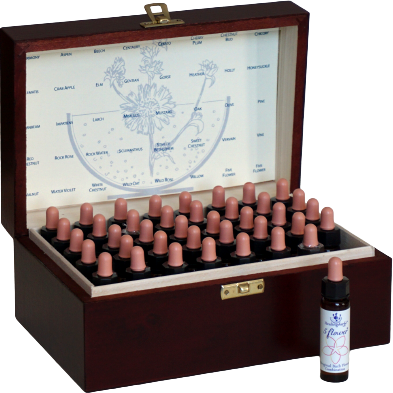
Skylark Books features a home-use range of Homoeopathic Remedies
produced by Helios Homoeopathy Ltd. If you would like to purchase
homoeopathic remedies or books from this site, click
here
or
on any of the homoeopathic remedy or book images on this
page.
Homoeopathy - An Introduction
Homoeopathy (also spelt: homeopathy) is an approach to healing which
is based on the primary principle of "treating like with like." The
word, itself, is derived from the Greek words, homos (same) and pathos
(suffering). A homoeopathic remedy is a remedy which can create a
symptom complex and can therefore cure that same symptom complex when
found in a disease.
A more complete description of the homoeopathic principle would be:
that which can produce a particular complex of physiological reactions
in a healthy person, can be used in minute doses to treat a person in
whom those same (or similar) reactions are found as symptoms of a
disease.
An
example can be seen in the effects of Belladonna, the leaves and
berries of which are poisonous. Here is a plant which can produce a
set of symptoms characterized by fever with convulsions, hot, dry, red
skin, glazed eyes with dilated pupils, throbbing headache and delirium
- to mention only a few.
Very
similar symptoms to these are not uncommon in the kind of night fevers
often found in children, and Belladonna in a highly diluted
homoeopathic form has been used as a safe and effective remedy for
this kind of fever for nearly 200 years.
The
first requirement in the development of a homoeopathic remedy then, is
to establish what changes it will create in healthy subjects. Such a
test is done on a number of people of both genders to establish the
symptoms experienced in common. This test is called a proving.
(The original meaning and earlier general usage of the word "prove"
was to test something, though it is now generally taken as "to
establish the truth of.")
A
homoeopathic proving of a substance is not done using crude doses as
many medicinal substances (natural or otherwise) are too potent to
safely administer. This brings us to the next primary principle of
homoeopathy: potentization.
If
treating like with like in order to achieve cure is a concept that is
not intuitively obvious to our way of thinking, the idea of
potentization is even more of a challenge. We naturally understand
that the more concentrated a substance is, the stronger its effects
are. This is logical and consistent with experience. If I take 1 ml
of a 0.1% solution of Belladonna, I have a fairly toxic substance,
liable to cause some very uncomfortable symptoms. If I increase its
concentration by 100, I have a 10% solution which is a lethal. If I
dilute the weaker 0.1% solution even more, say to 0.001%, I may not
notice any symptoms at all.
Yet
the homoeopathic process of potentization dilutes the original
substance well beyond this point, so far beyond in fact, that it would
be difficult (if not impossible) to find any of the original substance
in the solution. (This is the primary reason why those who dismiss
the homoeopathic effect regard it as nothing more than placebo effect,
i.e. suggestion. Unfortunately for this argument, an appropriately
chosen homoeopathic remedy will work as well on a pet or herd of
cattle as it will on us suggestible human beings.)
So
how can microscopically diluted substances have any useful effect?
How
it is diluted is the determining factor between ending up with nothing
or a homoeopathic remedy.
In
preparing substances for provings, as well as for prescribing
purposes, the substance is diluted in a particular way. Why it
works is not clear. There are many ideas and theories. That it
works is easily demonstrable and is borne out by 200 years of
experience.
The
original substance (plant extract) is first put into solution -
usually alcohol but water can also be used. It is then diluted in
alcohol by a specified amount - usually 1:10 or 1:100. At this point
the weakened solution in a stoppered bottle is impacted firmly and
repeatedly against a firm but slightly elastic object, like a large
book. This "thumping" of the diluted solution is called "succussion"
and is usually done 10 to 20 times. The solution is again diluted in
the same ratio, say 1:100 and then succussed again 10 to 20 times.
This process continues: dilution - succussion - dilution - succussion,
etc. If a substance has been diluted by 1:100 (followed by succussion
each time) through 6 dilution/succussion steps, it is called a 6th
centesimal potency of the substance, or just 6C. If we were preparing
Belladonna in this way it would be called Belladonna 6C. (The amount
of original substance at the 6C level is already infinitesimally
small; something like 1 part in 1,000,000,000,000.)
It
is the action of diluting in steps and thumping or energizing the
solution between each step that somehow accounts for the difference
between arriving at a useful homoeopathic remedy or the inevitable
nothing that simple dilution would achieve.
It
is usual to conduct provings with these highly diluted/succussed
remedies, and it is not uncommon to produce striking effects in
healthy subjects at the 30th dilution, for example. These symptoms
are similar in character to but milder than the toxic effects of the
crude substance and are not the result of toxicity as there is nothing
material left at these levels of dilution. A drop of Belladonna 30C
taken daily for a few days very often creates a feverish state with
throbbing headache in a healthy person, but when the dosage is stopped
the headache, fever, etc. disappear with no after effects. Continued
dosing continues to produce the discomfort but not , as in the case of
crude Belladonna, deterioration of bodily function and death.
Similarly a drop or a tablet of Belladonna 30C, as a homoeopathic
remedy, given to someone with a fever and throbbing headache, will
usually result in relief. There is no toxicity involved, and also no
painkiller required to numb the pain.
The
provings are done blind so that the subject doesn't know what the
homoeopathic substance is, and modern provings often use a control
group which receives a placebo. The person conducting the proving
doesn't know who received the placebo until the proving has been
completed and results tallied.
The
proving shows the broad range of symptom phenomena a substance will
produce and these are noted in detail in order to arrive at a closely
defined symptom picture. The symptom picture for each
remedy is carefully catalogued and recorded for the homoeopath's use
in treating their patients. This collection of symptom pictures is
called the homoeopathic Materia Medica which is available in
published form, and is the homoeopath's bible for prescribing
purposes.
The
prescription must be a very close match between the symptom picture of
the remedy and the symptom picture of the patient's illness.
Belladonna produces a headache which is more accentuated on the right
side of the head. Bromium (Bromine) produces a headache which is more
left-sided. A patient's symptoms may show a left or right
predominance and this must be taken into account by the prescriber
when selecting the most appropriate remedy.
Rhus
Toxicodendron (Poison Oak) produces aching joints which improve with
movement. Bryonia (White Bryony) produces joint pains which become
worse with any movement.
Drosera (Sundew) produces a cough which characteristically becomes
worse after midnight and especially when lying down. Nux Vomica
(Vomiting Nut) produces a cough which becomes particularly bad in the
morning, less so at other times of the day. So there is even a time
element which arises out of the proving and it will often be found
with illnesses that they are better or worse at different times of the
day and night. This must also be considered in the match.
The
nature of the remedy characteristics doesn't stop at physical
symptoms. Homoeopathic remedies can make the prover moody, irritable,
self-pitying, wanting to be alone, wanting attention and affection,
etc. depending on what is being tested.
If
we find a child that has diarrhoea and at the same time is cross,
screaming, throws things and can not be comforted, we see a similar
symptom picture in Chamomilla (Chamomile). If a child has diarrhoea
and wants to be held and cuddled, Pulsatilla (Wind Flower) will
produce a better result.
From
this it becomes obvious that in homoeopathy there isn't such a thing
as routine prescribing. There isn't one remedy for a flu, another for
a head cold, another for period pains. Everyone's symptoms are
individual. There may be a general flu epidemic going around but each
person will reflect the general influenza characteristic in an
individual way. What is common and what is individual must both be
taken into account in selecting the most appropriate remedy.
There are, fortunately, a few welcome exceptions. Probably the most
popular homoeopathic remedy of all time is Arnica. This remedy
produces and treats the experience of physical trauma, particularly
the result of impact or strain, but also any physical trauma benefits
from this amazing remedy. With Arnica and a few other first aid
remedies, little attention has to be paid to detailed symptoms. As
soon after an injury as possible, an Arnica 30C can be taken to ease
the pain and speed the recovery. There are a few other remedies in
this therapeutic category and their uses are detailed in the various
homoeopathic first aid and home prescribing books available through
this website.
Another important point regarding the essential nature of homoeopathy
is that a skilled homoeopath is trained to observe the patient in the
most comprehensive way. Homoeopathy does not easily address an
individual symptom without the overall symptom picture of the remedy
matching the overall and essential constitution of the patient. In
this sense it is regarded as a holistic form of therapy.
From
this we can see that homoeopathy can bring a wonderful healing element
into society. This is especially important where the conventional
alternative may involve a high price in the form side effects and
often dependency on order to maintain a controlled state of the
patient's condition. It is acknowledged that antibiotics are
over-prescribed causing digestive disorders and eventual
ineffectiveness, that steroids can bring tremendous problems in their
wake if used excessively in the control of inflammatory conditions,
and others.
It
is important to not undervalue the importance of many of the solutions
that conventional medicine offers for conditions which homoeopathy can
ease but not resolve. It would be dangerous folly to suggest to an
insulin-dependent diabetic patient, for example, that homoeopathy can
cure their diabetes and that they can come off their insulin. But
homoeopathy can ease the diabetic's suffering in many cases while they
maintain their regular course of conventional medicine.
There are also many cases where the conventional approach is intruding
on the organism's self-regulatory health system in order to regulate a
condition. This can make it difficult for a homoeopathic approach to
work as it impedes the more natural form of recovery that homoeopathy
can stimulate in the body's health system. Fortunately there is an
ever-increasing number of qualified conventional doctors who are
becoming trained in homoeopathy and are thus able to provide the best
of both worlds for the patient's ultimate benefit.
Robert Lawrence (Skylark Books)
Homoeopath &
Technical Director for Helios Homoeopathy Ltd.
November 2001